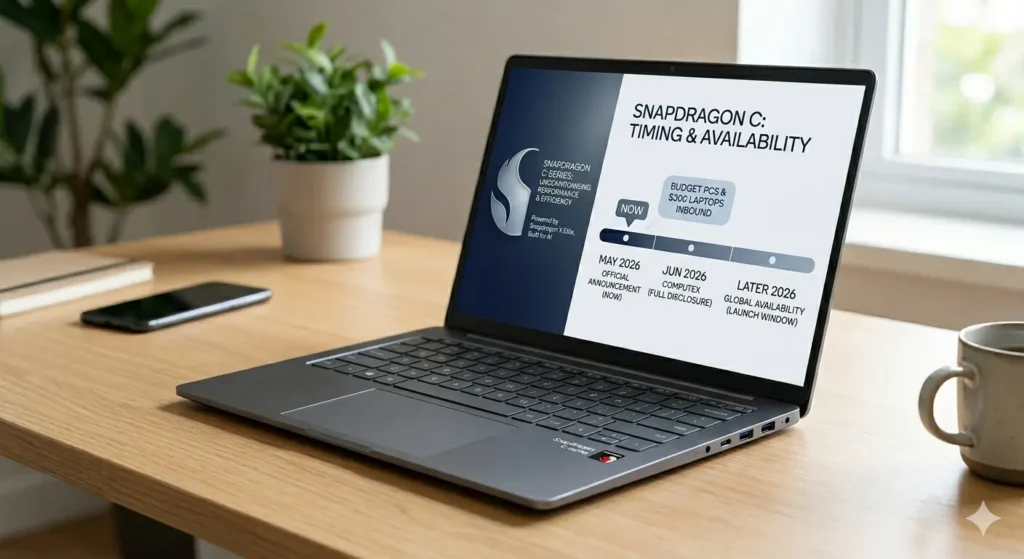
The Snapdragon C timing could become one of the biggest challenges facing Qualcomm’s newest laptop platform.
Meanwhile, the company is launching a processor designed for affordable Windows laptops at a time when hardware costs are moving in the opposite direction.
Consequently, some analysts are asking a simple question:
Can a $300 laptop platform succeed when memory, storage, and manufacturing costs continue rising?
Additionally, consumers are becoming increasingly sensitive to laptop pricing after several years of inflation and supply-chain disruptions.
Because of that, Qualcomm may face a much tougher market than it originally expected.
This discussion also connects directly to:
- Snapdragon C: The $300 ARM Laptop Revolution
- Snapdragon C Is Here to Power Awful Laptops (Or Surprisingly Good Ones?)
- The First Snapdragon C Laptop Is Here, But Key Details Are Missing
Why Snapdragon C Timing Matters
Processor launches do not happen in isolation.
Meanwhile, laptop pricing depends on:
- memory costs
- SSD pricing
- manufacturing expenses
- shipping costs
- retailer margins
Consequently, even an affordable processor cannot guarantee an affordable laptop.
Additionally, many component suppliers have recently warned about:
- memory shortages
- NAND price increases
- manufacturing constraints
- higher production costs
Because of that, Qualcomm’s budget strategy may face pressure before devices even reach store shelves.
Furthermore, consumers typically judge products by final pricing rather than processor specifications.
Qualcomm’s Goal Is Still Ambitious
To be fair, Qualcomm’s objective remains impressive.
Meanwhile, most Windows-on-ARM devices have targeted:
- premium buyers
- business users
- productivity enthusiasts
- early adopters
However, Snapdragon C aims to reach:
- students
- families
- first-time laptop buyers
- education markets
Consequently, the platform could dramatically expand Windows on ARM adoption.
Additionally, lower-priced devices often help ecosystems grow much faster than premium products.
Because of that, Qualcomm’s long-term strategy still makes sense.
For a complete overview of the platform, read:
Snapdragon C: The $300 ARM Laptop Revolution
RAM Prices Are Moving in the Wrong Direction
One major problem involves memory pricing.
Meanwhile, global demand for:
- AI hardware
- data centers
- consumer electronics
- enterprise systems
continues increasing.
Consequently, RAM prices have experienced significant pressure.
Additionally, laptop manufacturers cannot easily absorb every increase.
Because of that, rising memory costs could make affordable laptops harder to produce.
Furthermore, budget devices often operate on extremely thin profit margins.
As a result, even small component increases can have a noticeable impact on retail pricing.
Storage Costs Create Another Challenge
Storage pricing presents similar concerns.
Meanwhile, SSDs remain essential for modern laptop performance.
Consequently, manufacturers cannot simply eliminate storage upgrades to save money.
Additionally, consumers increasingly expect:
- fast boot times
- responsive systems
- adequate storage space
- smooth application loading
Because of that, manufacturers must balance affordability with user expectations.
Furthermore, cutting costs too aggressively can create products that feel outdated immediately.
The Budget Laptop Market Is Extremely Competitive
Even without component challenges, the budget market remains difficult.
Meanwhile, manufacturers already compete aggressively through:
- pricing
- promotions
- educational discounts
- bundled services
Consequently, profit margins are often very small.
Additionally, buyers frequently compare devices based on price before anything else.
Because of that, Qualcomm must help partners deliver genuine value.
Furthermore, competing against established Intel and AMD systems is never easy.
Chromebooks Continue Applying Pressure
Chromebooks create another obstacle.
Meanwhile, many schools and organizations already deploy:
- ChromeOS devices
- cloud-first workflows
- web-based applications
- centralized management systems
Consequently, Qualcomm’s partners must convince buyers that Windows offers enough additional value.
Additionally, Chromebooks remain extremely competitive in:
- education
- budget computing
- entry-level deployments
- student programs
Because of that, the battle extends beyond processor performance.
Missing Details Create Uncertainty
Another issue involves unanswered questions.
Meanwhile, consumers still want more information regarding:
- performance
- configurations
- memory options
- storage capacities
Consequently, uncertainty may slow adoption.
Additionally, buyers often hesitate when specifications remain unclear.
Because of that, Qualcomm and its hardware partners must provide clearer information as products launch.
For more on the unanswered questions, read:
The First Snapdragon C Laptop Is Here, But Key Details Are Missing
There Is Still Reason for Optimism
Despite the challenges, several factors work in Qualcomm’s favor.
Meanwhile, ARM processors continue offering:
- strong efficiency
- excellent battery life
- cooler operation
- quieter systems
Consequently, Snapdragon-powered laptops may still deliver a better experience than many traditional budget devices.
Additionally, battery life remains one of the most important purchasing factors for:
- students
- travelers
- remote workers
- office employees
Because of that, Qualcomm’s strengths align well with modern consumer priorities.
Success Depends on Real Products
Ultimately, consumers do not buy processors.
Instead, they buy laptops.
Consequently, the success of the platform depends heavily on manufacturers.
Additionally, device makers must balance:
- affordability
- performance
- battery life
- build quality
while keeping prices attractive.
Because of that, real-world products matter more than announcements.
Furthermore, the first generation of devices will likely shape public perception for years.
The Bigger Picture Matters
Importantly, Qualcomm’s strategy extends beyond a single year.
Meanwhile, Windows on ARM continues improving steadily.
Consequently, affordable devices help introduce more users to the ecosystem.
Additionally, wider adoption encourages:
- software optimization
- developer support
- ecosystem growth
- future innovation
Because of that, even moderate success could create long-term benefits.
Final Thoughts
The Snapdragon C timing is not ideal.
Meanwhile, rising memory and storage costs create challenges for any company targeting affordable hardware.
Consequently, Qualcomm faces a difficult balancing act between aggressive pricing and practical realities.
Additionally, unanswered questions surrounding specifications and final laptop pricing continue generating skepticism.
However, strong battery life, ARM efficiency, and growing Windows-on-ARM support still provide meaningful advantages.
For the complete breakdown of Qualcomm’s strategy and future plans, read:
Snapdragon C: The $300 ARM Laptop Revolution
And surprisingly, the biggest challenge facing Qualcomm may not be Intel, AMD, or Apple.
It may simply be the cost of building a truly affordable laptop in 2026.