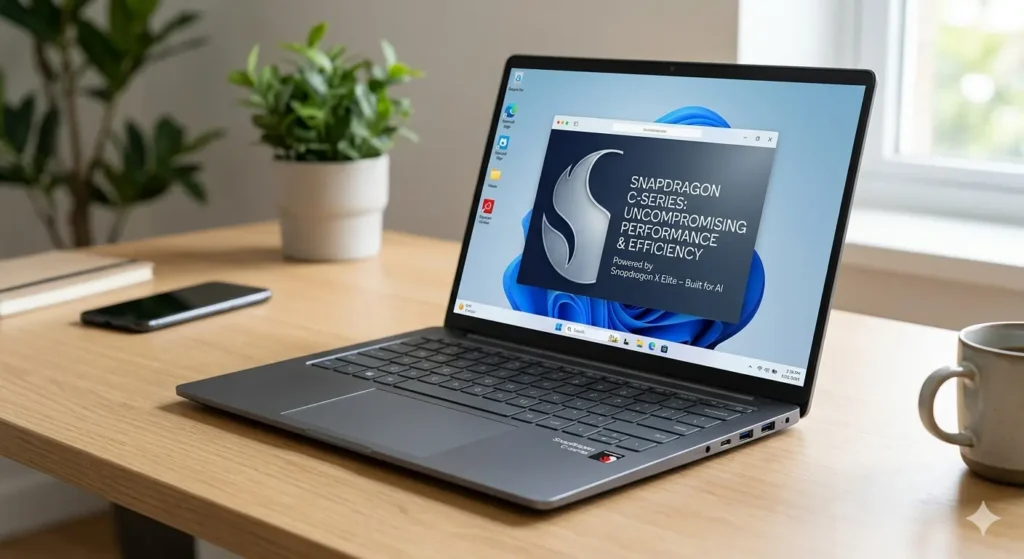
The Snapdragon C laptop platform is Qualcomm’s latest attempt to bring Windows on ARM to the masses.
Meanwhile, most ARM-powered Windows devices have focused on premium buyers willing to spend hundreds or even thousands of dollars on new hardware. However, Qualcomm is now taking a completely different approach.
Instead of chasing flagship laptops, the company is targeting devices that could cost as little as $300.
Consequently, the announcement may become one of the most important moments for Windows on ARM adoption.
Additionally, affordable ARM laptops could finally compete more directly with:
- Chromebooks
- entry-level Windows laptops
- budget tablets
- low-cost productivity devices
Because of that, Qualcomm’s newest processor launch feels much bigger than a simple hardware refresh.
This announcement also connects directly to:
- Snapdragon C: The $300 ARM Laptop Revolution
- Qualcomm Finally Reveals a Budget-Friendly Windows on ARM Chip
- Acer Aspire Go 15 Debuts as First Snapdragon C Laptop
Why Qualcomm Created the Snapdragon C Laptop Platform
For years, Qualcomm focused on premium laptop processors.
Meanwhile, flagship Snapdragon systems emphasized:
- AI features
- premium displays
- ultra-thin designs
- long battery life
However, most consumers purchase much cheaper devices.
Consequently, Qualcomm identified a massive opportunity in the budget market.
Additionally, millions of buyers prioritize:
- affordability
- battery life
- portability
- reliability
over high-end performance.
Because of that, the Snapdragon C laptop platform targets everyday users rather than power users.
For a complete overview of Qualcomm’s strategy, competition, future plans, and the ARM laptop market, read our pillar guide:
Snapdragon C: The $300 ARM Laptop Revolution
The Goal Is Simple: Affordable Windows on ARM
Windows on ARM has improved dramatically over the last few years.
Meanwhile, Microsoft has invested heavily in:
- software compatibility
- ARM optimization
- developer support
- application performance
Consequently, ARM laptops are now much more practical than they once were.
However, pricing remained a barrier.
Additionally, many ARM-powered Windows devices cost more than traditional budget laptops.
Because of that, Qualcomm wants to lower the entry point significantly.
The Snapdragon C laptop platform could become the first ARM experience many consumers ever try.
Furthermore, affordable pricing may help accelerate ARM adoption across education and consumer markets.
What Makes the New Processor Different?
Interestingly, Qualcomm is not trying to beat premium processors with this chip.
Instead, the company focuses on:
- efficiency
- affordability
- battery life
- everyday performance
Consequently, the processor is designed for common tasks such as:
- web browsing
- office work
- streaming
- video conferencing
Additionally, lower power consumption may allow manufacturers to build:
- quieter laptops
- thinner systems
- cooler devices
- longer-lasting notebooks
Because of that, users may notice benefits beyond raw performance numbers.
Furthermore, many consumers simply want a responsive laptop rather than maximum benchmark performance.
Snapdragon C Laptop vs Traditional Budget Windows PCs
Traditional budget laptops often struggle with:
- weak battery life
- noisy cooling systems
- slow responsiveness
- poor efficiency
Meanwhile, ARM processors take a different approach.
Consequently, users often experience:
- better battery endurance
- instant wake-up
- cooler operation
- quieter performance
Additionally, many everyday tasks run smoothly on efficient ARM hardware.
Because of that, Qualcomm believes users will appreciate the overall experience even if benchmark scores remain modest.
Furthermore, better efficiency often improves the user experience more than small performance gains.
Chromebooks Should Be Worried
One of the biggest implications of this launch involves Chromebook competition.
Meanwhile, Chromebooks dominate many schools and educational environments because they are:
- inexpensive
- efficient
- easy to manage
- reliable
However, Windows still offers broader software support.
Consequently, Snapdragon-powered laptops could combine:
- Chromebook-like battery life
- Windows flexibility
- affordable pricing
- modern hardware
Additionally, schools and institutions may find this combination extremely attractive.
Because of that, the education market could become a major growth area.
Furthermore, educational buyers increasingly want devices that remain useful beyond simple web browsing.
The First Devices Are Already Arriving
Processor announcements matter, but actual products matter more.
Fortunately, manufacturers are already launching hardware based on the new platform.
Additionally, Acer has introduced the Aspire Go 15 as one of the first devices using the processor.
Consequently, consumers will soon see how Qualcomm’s budget strategy performs in real-world products.
For the device launch coverage, read:
Acer Aspire Go 15 Debuts as First Snapdragon C Laptop
Meanwhile, early hardware launches often reveal strengths and weaknesses much faster than processor announcements alone.
Qualcomm Wants ARM to Go Mainstream
Importantly, Qualcomm’s long-term goal extends beyond a single laptop generation.
Meanwhile, ARM adoption continues growing across:
- smartphones
- tablets
- laptops
- servers
Consequently, affordable laptops represent the next logical step.
Additionally, ecosystem growth often depends on lower-priced products reaching wider audiences.
Because of that, the Snapdragon C laptop platform may prove more important than many premium processor launches.
Furthermore, widespread adoption could encourage more developers to optimize applications for ARM devices.
Challenges Still Remain
Despite the excitement, questions remain.
Meanwhile, consumers still want answers about:
- performance
- compatibility
- multitasking
- upgradeability
Consequently, Qualcomm must demonstrate that ARM laptops can meet everyday expectations.
Additionally, software support remains an important factor for some buyers.
Because of that, real-world testing will ultimately determine the platform’s success.
For a broader look at the opportunities and challenges facing this platform, see:
Snapdragon C: The $300 ARM Laptop Revolution
Why This Announcement Matters
Many processor launches target enthusiasts.
However, most consumers simply want affordable laptops that work reliably.
Consequently, Qualcomm’s strategy focuses on:
- value
- efficiency
- affordability
- battery life
instead of chasing premium specifications.
Additionally, the company is entering one of the largest laptop segments in the world.
Because of that, success here could have a much bigger impact than another flagship chip release.
Furthermore, affordable ARM laptops may help reshape expectations for entry-level Windows devices.
Final Thoughts
The Snapdragon C laptop announcement marks an important step for Windows on ARM.
Meanwhile, Qualcomm is finally targeting the market where most laptops are actually sold.
Consequently, affordable ARM-powered Windows devices may become much more common over the next few years.
Additionally, buyers could benefit from:
- lower prices
- better battery life
- improved efficiency
- greater competition
If you’re just starting to follow this new processor platform, our complete guide covers everything from Windows on ARM adoption to future laptop launches:
Snapdragon C: The $300 ARM Laptop Revolution
And surprisingly, the future growth of Windows on ARM may depend less on premium laptops and more on affordable devices powered by chips like this one.