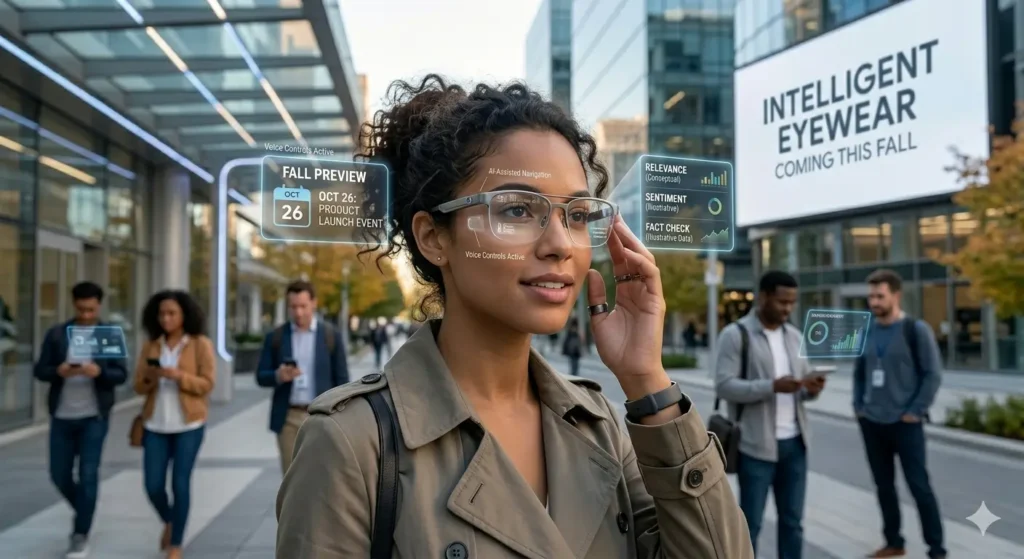
Over the past few days, you have probably seen the word “aura” appearing everywhere — on Google Trends, social media, YouTube thumbnails, and technology headlines. At first glance, many people assumed it was connected to Gen Z slang or spiritual trends. However, the real reason “aura” is trending is much more concrete: intelligent eyewear is coming this fall, and Google’s Project Aura smart glasses are becoming one of the biggest tech launches of 2026.
During Google I/O 2026 on May 19, Google officially unveiled Project Aura, a new augmented reality smart-glasses system developed in partnership with XREAL. Unlike earlier experimental AR products, Project Aura is designed as a real consumer-ready device expected to launch in fall 2026.
Consequently, that is why “aura” suddenly exploded across search trends. People are searching for:
- release dates
- pricing
- hands-on impressions
- AR features
- Gemini AI integration
- Android XR details
This guide explains what Project Aura is, why the intelligent eyewear trend matters, how the glasses work, and why many analysts believe this could finally push AR glasses into the mainstream.
For a full breakdown of all Google I/O 2026 announcements — including Gemini AI, Android XR, and Google Search upgrades — read our complete Google I/O 2026 recap.
What Is Project Aura?
First of all, Project Aura is Google’s newest attempt to bring augmented reality into everyday life. However, unlike previous AR glasses that mainly mirrored phone screens or targeted developers, Project Aura is designed as a standalone intelligent eyewear platform.
The glasses run Android XR, Google’s new operating system built specifically for:
- AR glasses
- mixed reality devices
- spatial computing systems
Additionally, the hardware uses a Snapdragon XR chipset from Qualcomm and deeply integrates Gemini AI into the user experience.
Meanwhile, the partnership with XREAL is especially important because XREAL already has years of experience building lightweight consumer AR glasses.
As a result, Project Aura feels much more practical than earlier smart-glasses experiments.
Why Intelligent Eyewear Is Suddenly Important Again
For years, smart glasses struggled with several major problems:
- heavy weight
- short battery life
- awkward designs
- limited software
- weak real-world usefulness
Traditionally, most AR devices either looked too futuristic or felt too uncomfortable for daily wear.
However, Project Aura approaches the problem differently.
Instead of packing all processing hardware into the glasses themselves, Google uses a split-compute architecture. Consequently, the glasses remain lightweight while a separate compute puck handles most of the processing power and battery workload.
That design decision changes everything because comfort has always been one of the biggest barriers to wearable AR adoption.
Key Features of the Intelligent Eyewear Coming This Fall
More importantly, here is what makes Project Aura stand out from previous smart glasses.
Massive 70-Degree Field of View
Most consumer AR glasses currently offer a field of view between 30 and 50 degrees.
Project Aura increases that dramatically to around 70 degrees.
As a result:
- virtual displays appear much larger
- multitasking feels more immersive
- floating windows become easier to use
- movies and media feel more cinematic
Instead of looking through a tiny floating rectangle, users experience something much closer to a large virtual monitor.
For productivity and entertainment, that improvement is substantial.
Lightweight Split-Compute Design
Traditionally, one of the biggest problems with smart glasses has been weight.
Heavy batteries and processors often make AR glasses uncomfortable after long use. However, Project Aura solves this with its split-compute system.
The glasses themselves weigh approximately 85–90 grams, while a separate compute puck:
- handles processing
- stores the battery
- manages thermal cooling
Meanwhile, the puck can sit inside:
- a pocket
- a bag
- a jacket clip
Consequently, the glasses remain much lighter than most competing AR systems.
Android XR with Gemini AI Integration
Project Aura runs Android XR, a new operating system specifically designed for spatial computing.
Meanwhile, Gemini AI acts as the intelligent assistant behind the glasses.
As a result of this integration, users can:
- ask questions about what they see
- receive contextual suggestions
- translate signs instantly
- navigate cities hands-free
- summarize information visually
Furthermore, the operating system supports:
- voice interaction
- eye tracking
- gesture controls
- Android app support
As a result, the experience feels far more advanced than simple notification glasses.
Real-Time Translation and Navigation
Additionally, navigation is another major use case for Project Aura.
Instead of constantly checking a phone screen while walking, users can see:
- arrows
- street directions
- distance markers
- navigation overlays
projected directly into their field of view.
At the same time, Gemini AI can translate:
- signs
- restaurant menus
- documents
- public information
in real time.
For travelers, this could become one of the most practical AR features yet.
Integration with Google Services
Because Project Aura runs Android XR, it connects naturally with Google’s ecosystem.
For example, users can read Gmail messages on floating virtual screens.
Meanwhile, YouTube videos can remain visible while cooking or multitasking.
Users can also:
- browse Google Photos
- open Maps directions
- join Google Meet calls
- interact with Android apps
without constantly pulling out a phone.
Consequently, the device feels more like a wearable computer than a traditional accessory.
Why “Aura” Is Trending Right Now
Right after Google I/O 2026, search volume for “aura” increased dramatically.
There are two major reasons behind the trend.
Reason 1: Project Aura Announcement
Google officially revealed Project Aura during the keynote presentation.
Naturally, news websites, YouTube creators, and social media accounts immediately began discussing:
- release dates
- hardware specs
- AI features
- pricing estimates
- comparisons with Apple Vision Pro
As a result, millions of users searched for “Aura” online.
Reason 2: Gen Z Slang Overlap
At the same time, “aura” already existed as a popular Gen Z slang term.
Young users often talk about:
- “aura points”
- “negative aura”
- “aura loss”
when discussing social status, confidence, or awkward moments online.
Interestingly, the slang trend and the smart-glasses launch reinforced each other at exactly the same time.
Consequently, the word “aura” became one of the hottest trending search terms online.
Expected Release Date and Pricing
Google says Project Aura is launching as intelligent eyewear coming this fall.
Based on previous Google hardware cycles, analysts expect:
- October 2026
- or November 2026
as the most likely release window.
So far, pricing has not been officially confirmed. However, industry estimates currently place Project Aura between:
600–600–1,000
depending on storage, accessories, and included hardware.
That positions it:
- above Ray-Ban Meta Smart Glasses
- far below Apple Vision Pro
in overall pricing.
How Project Aura Compares to Other Smart Glasses
| Feature | Project Aura | Ray-Ban Meta | Apple Vision Pro |
|---|---|---|---|
| Display | Yes, 70° FOV | No AR display | Advanced mixed reality |
| Operating System | Android XR | Proprietary | visionOS |
| AI Assistant | Gemini AI | Meta AI | Siri |
| Weight | ~85–90g glasses | ~50g | ~600g headset |
| Battery Life | ~4–6 hours | ~4 hours | ~2 hours |
| Estimated Price | 600–1,000 | 300–400 | $3,500 |
Overall, Project Aura sits in the middle of the current smart-glasses market.
It offers:
- far more capability than camera glasses
- much lighter hardware than full AR headsets
- deeper AI integration than most competitors
Because of this balance, many analysts believe Project Aura could become the first AR product practical enough for everyday users.
Real-World Use Cases
For Travelers
Travelers could:
- translate signs instantly
- receive walking navigation overlays
- identify landmarks visually
without constantly touching a phone.
For Professionals
Meanwhile, professionals may use Project Aura for:
- virtual monitors
- hands-free video calls
- document viewing
- collaborative meetings
while remaining mobile.
For Students
Additionally, students could:
- watch lectures
- summarize articles
- research topics
- translate languages
using Gemini AI assistance directly inside the glasses.
For Casual Users
Everyday users may simply enjoy:
- watching movies
- cooking tutorials
- smart-home controls
- floating media displays
inside their environment.
Potential Downsides and Concerns
Of course, no technology is perfect.
Privacy Concerns
Because the glasses include outward-facing cameras, some people may worry about:
- recording
- facial recognition
- public privacy
Google will likely need strong visual recording indicators and privacy protections.
Battery Life
Although the split-compute design helps significantly, battery life still remains limited to around 4–6 hours of heavier use.
For all-day wearable computing, that may still feel restrictive.
Social Acceptance
Meanwhile, smart glasses still feel unusual to many people in public settings.
It may take several years before intelligent eyewear feels socially normal in the same way smartphones eventually did.
App Ecosystem Limitations
Because Android XR is still new, the app ecosystem may remain limited initially.
However, Google’s large Android developer base could help adoption grow relatively quickly.
Frequently Asked Questions
When will Project Aura release?
Google currently expects a fall 2026 launch, likely around October or November.
How much will Project Aura cost?
Current analyst estimates suggest a price range between 600 and 1,000.
Does Project Aura need a phone?
No. The compute puck handles most processing independently, although phones may still assist with connectivity and setup.
Can users wear prescription lenses?
Yes. XREAL already supports prescription inserts, and Project Aura is expected to continue that support.
Is Project Aura related to Google I/O 2026?
Yes. It was one of the biggest hardware announcements shown during Google I/O 2026.
Bottom Line
Ultimately, the word “aura” is trending because intelligent eyewear is finally becoming practical enough for mainstream consumers.
Project Aura combines:
- lightweight AR glasses
- Android XR
- Gemini AI
- spatial computing
- real-time translation
- wearable navigation
into a much more realistic wearable platform than earlier attempts.
Whether the product succeeds commercially remains uncertain. However, one thing is already clear: Google believes the future of computing may eventually move from phones and laptops directly onto our faces.
For more on Project Aura, Android XR, Gemini AI, and other Google I/O 2026 announcements, read our full Google I/O 2026 recap.