Physical Address
304 North Cardinal St.
Dorchester Center, MA 02124
Physical Address
304 North Cardinal St.
Dorchester Center, MA 02124
Gadgets & Lifestyle for Everyone
Gadgets & Lifestyle for Everyone
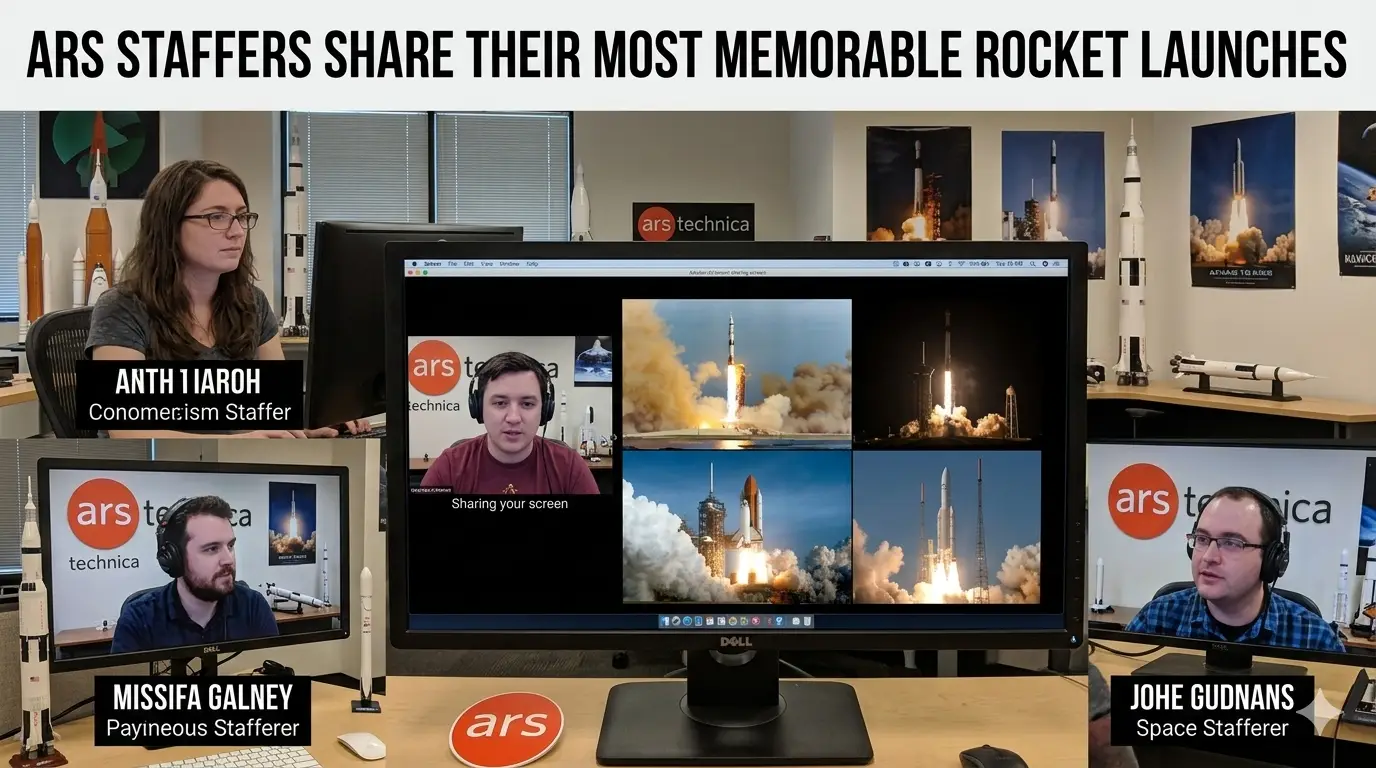
A century ago, Robert Goddard launched the world’s first liquid-fueled rocket. It rose just 41 feet and flew for 2.5 seconds before crashing into ice and snow. But that modest flight—aboard a rocket named “Nell”—launched the modern age of spaceflight. To mark the centennial, Ars Technica staffers shared their most unforgettable launch experiences .
| Detail | Information |
|---|---|
| Historic Date | March 16, 1926 |
| Rocket | “Nell” (Goddard’s first liquid-fueled rocket) |
| Flight Details | 41 feet altitude, 2.5 seconds duration |
| Significance | Birth of modern spaceflight |
| Staff Memories | Shuttle, Soyuz, Delta, SpaceX, Minotaur |
Lee Hutchinson
In February 2010, Lee attended the penultimate night launch of the shuttle program—STS-130—as a plus-one for his wife, who had worked on Node 3 at Boeing. The mission carried Node 3 and Cupola to the ISS.
The day before launch included private tours of KSC locations: the Crawler-Transporters, Pad 39-A with Endeavour staged and ready, the VAB, and processing facilities. A team lunch with ESA partners featured Italian engineers from Alenia who, “being ever Italian, had brought along a lot of wine.”
The first launch attempt (4:39 am, February 7) scrubbed due to weather. After an exhausting two-hour bus ride back, they tried again the next night.
“At 04:18 Eastern time on February 8, Endeavour lifted silently into the sky on a retina-searing plume of incandescent light from the SRBs. It took several awe-filled seconds for the sound to come rolling across the water—but when it did, it was all-encompassing. I could feel the ground under my feet tremble as my clothes vibrated against my skin.”
The crackling of the solids was unforgettable: “a volume and frequency that literally shakes your pants.”
John Timmer
Nearly 50 years ago, John’s family vacation in Florida coincided with a predawn launch—almost certainly a Delta 1 carrying Japan’s Himawari 1 meteorological satellite.
“My father learned of a pre-daylight launch, and the whole family dutifully loaded up the car at about five in the morning. We didn’t make it on time. At some point, my father spotted the rocket, pulled over to the side of the road, and woke us kids up. There, already rapidly ascending, was a rocket that lit the pre-dawn sky, giving everything a bluish tint.”
That single static image has stuck with him ever since.
Eric Berger
In 2014, Eric traveled to Russia and Kazakhstan for a project on NASA’s state, observing a crewed Soyuz launch with Butch Wilmore’s family.
“The highlight was the late-night launch from an observation point less than 1.5 km from the pad. After riding a bus across some of the rattiest roads I’ve ever experienced, we climbed up onto a small covered stand. It all felt historic. This was the pad from which Sputnik first went to space, and then Yuri Gagarin.”
The Soyuz-FG is modest by rocket standards—50 meters tall, lifting 7 metric tons—but the proximity made all the difference.
“As the rocket’s engines ignited, the Soyuz appeared to ascend almost directly overhead. There was a period of five or 10 seconds when, very viscerally, I realized that if something went wrong up there, things might go very badly down here.”
Mike Suffredini, then NASA’s ISS program director, walked by after ascent and quipped: “Scary enough for you?”
Jonathan Gitlin
Jonathan stood next to the giant countdown clock, three miles from the pad, for NASA’s last shuttle launch.
“A lifetime of seeing footage of Apollo rockets launching left a false impression; there was nothing slow about the way Atlantis left the launchpad. With relatively low cloud cover, the shuttle was gone from sight quickly, but the sound, which took some time to reach us in the first place, carried on regardless.”
He also recalls a 2020 NRO mission aboard a Minotaur rocket from Wallops Island, viewed from Chincoteague, and a 2023 SpaceX launch coinciding with the Sebring 12 Hours race.
“Even the man with a 6-foot-tall staff made of beer cans could find time to appreciate the sight of a missile heading into space above us while dozens of race cars roared past.”
A Senior Editor
Discovery’s April 5, 2010 launch—shortly before sunrise on Easter Monday—produced the most spectacular sight this reporter has witnessed.
“The shuttle climbed into a high-altitude sunrise a couple of minutes after departing. Just as it jettisoned its twin boosters, the nearly transparent exhaust from Discovery’s three main engines caught the first sunlight of the day.”
The water vapor from the main engines instantly froze, creating a rarely seen “jellyfish” effect in the sky. Combined with the raw power of the solid rocket boosters, it was unforgettable.
“It was the only time, at least in my memory, that a space shuttle launch produced what looked like a jellyfish in the sky.”
From Goddard’s 41-foot hop to the thunderous crackle of solid boosters, from a child’s fleeting glimpse of a Delta rocket to a historian’s visceral proximity to a Soyuz—these memories span generations of spaceflight. Each launch, whether historic or personal, connects us to something larger than ourselves.