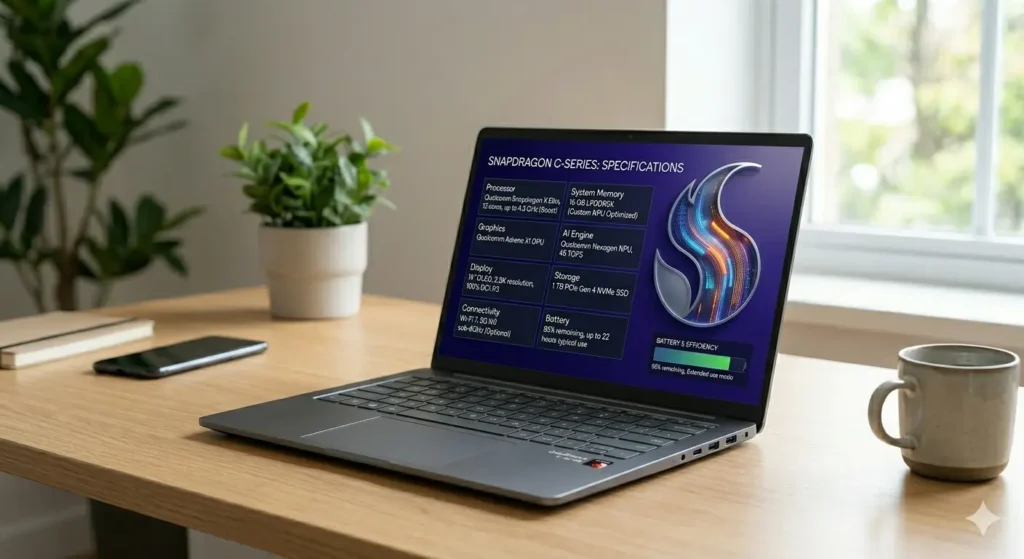
The Snapdragon C specs discussion has become almost as important as the processor announcement itself.
Meanwhile, Qualcomm’s new budget platform generated excitement by promising affordable Windows-on-ARM laptops that could cost around $300.
However, once the first devices started appearing, many consumers noticed something unusual.
Several important details remain unclear.
Consequently, buyers are asking questions about:
- memory configurations
- storage options
- performance expectations
- multitasking capabilities
before deciding whether the platform deserves their attention.
Additionally, affordable laptops live or die based on specifications.
Because of that, the missing details matter far more than they might for premium devices.
This analysis also connects directly to:
- Snapdragon C: The $300 ARM Laptop Revolution
- Acer Aspire Go 15 Debuts as First Snapdragon C Laptop
- Qualcomm Picks a Bad Time to Pitch a $300 Laptop Platform
Why Snapdragon C Specs Matter More Than Usual
Premium laptops often survive imperfect specifications because they offer:
- premium designs
- advanced features
- stronger performance
- brand recognition
However, budget laptops operate differently.
Meanwhile, consumers in this category carefully evaluate:
- RAM
- storage
- battery life
- display quality
- overall value
Consequently, specifications often determine whether a laptop feels usable after several years.
Additionally, buyers want confidence that their purchase will remain useful.
Because of that, missing information naturally creates uncertainty.
The First Laptop Has Arrived
The arrival of the Acer Aspire Go 15 finally gives consumers their first look at Qualcomm’s affordable ARM strategy.
Meanwhile, processor announcements can only reveal so much.
Consequently, actual products matter far more than presentations and marketing slides.
Additionally, the Aspire Go 15 provides the first opportunity to evaluate:
- real-world responsiveness
- battery life
- software compatibility
- user experience
Because of that, early reviews will carry significant weight.
For the launch coverage, read:
Acer Aspire Go 15 Debuts as First Snapdragon C Laptop
RAM Questions Remain Important
Memory may become one of the biggest concerns.
Meanwhile, modern Windows laptops increasingly require adequate RAM for:
- multitasking
- browser tabs
- productivity software
- video conferencing
Consequently, consumers want clear answers regarding memory configurations.
Additionally, insufficient RAM can make even efficient processors feel slow.
Because of that, memory specifications could heavily influence public perception of the platform.
Furthermore, budget laptops often receive criticism when manufacturers cut corners on memory.
Storage Capacity Matters Too
Storage is another major consideration.
Meanwhile, modern users expect enough space for:
- applications
- documents
- photos
- media files
- updates
Consequently, storage decisions significantly impact long-term usability.
Additionally, slow or limited storage can create frustration regardless of processor efficiency.
Because of that, buyers want detailed information before making purchasing decisions.
Furthermore, affordable devices must balance cost savings with practical usability.
Qualcomm Is Selling a Vision
Interestingly, Qualcomm’s strategy focuses heavily on the broader vision of affordable ARM computing.
Meanwhile, the company emphasizes:
- battery life
- efficiency
- affordability
- Windows-on-ARM growth
Consequently, many consumers already understand the platform’s goals.
However, practical buyers still need concrete specifications.
Additionally, marketing alone rarely convinces consumers to purchase hardware.
Because of that, detailed product information becomes increasingly important.
For the complete platform overview, read:
Snapdragon C: The $300 ARM Laptop Revolution
Performance Expectations Need Context
One challenge involves setting realistic expectations.
Meanwhile, some consumers compare every new processor to premium chips.
Consequently, unrealistic comparisons can create disappointment.
Additionally, Qualcomm designed this platform primarily for:
- students
- families
- office workers
- casual users
rather than power users.
Because of that, the processor should be evaluated according to its intended audience.
Furthermore, everyday responsiveness may matter more than benchmark performance.
Software Compatibility Is Less of a Concern
Fortunately, Windows on ARM has improved significantly.
Meanwhile, Microsoft continues investing in:
- application support
- ARM optimization
- compatibility tools
- developer resources
Consequently, software support is much stronger than it was several years ago.
Additionally, many popular applications now run natively on ARM hardware.
Because of that, compatibility concerns are gradually becoming less important.
The Budget Market Is Unforgiving
Budget buyers tend to be extremely value-conscious.
Meanwhile, even small specification differences can influence purchasing decisions.
Consequently, competitors will closely compare:
- memory
- storage
- battery life
- pricing
against Qualcomm-powered devices.
Additionally, Intel and AMD systems continue competing aggressively in the same market.
Because of that, every specification matters.
Furthermore, consumers have more choices than ever before.
The Timing Makes the Questions More Important
Rising component costs create additional pressure.
Meanwhile, memory and storage pricing remain unpredictable.
Consequently, manufacturers may face difficult decisions regarding specifications.
Additionally, consumers already worry about getting enough value for their money.
Because of that, unanswered questions become even more noticeable.
For a deeper discussion of the market challenges, read:
Qualcomm Picks a Bad Time to Pitch a $300 Laptop Platform
Early Reviews Will Shape Public Opinion
Ultimately, specifications tell only part of the story.
Meanwhile, reviewers will soon evaluate:
- responsiveness
- battery life
- multitasking
- software support
- overall experience
Consequently, real-world testing will answer many of the current questions.
Additionally, first impressions often shape public perception for years.
Because of that, Qualcomm and its partners need strong early reviews.
Furthermore, successful launch devices could encourage broader ARM adoption.
Why Buyers Should Not Panic Yet
Missing details do not automatically indicate problems.
Meanwhile, manufacturers often reveal additional specifications closer to launch.
Consequently, consumers may receive more information in the coming weeks.
Additionally, affordable devices sometimes exceed expectations once reviews arrive.
Because of that, patience may be worthwhile.
Furthermore, ARM efficiency could still provide meaningful advantages over traditional budget laptops.
Final Thoughts
The Snapdragon C specs conversation highlights an important reality.
Meanwhile, consumers are interested in Qualcomm’s affordable ARM vision.
However, buyers still need answers before making purchasing decisions.
Consequently, questions about:
- RAM
- storage
- performance
- multitasking
remain important.
Additionally, early hardware reviews will likely determine whether Snapdragon-powered laptops gain momentum.
For the complete guide covering Qualcomm’s strategy, ARM ambitions, and future laptop ecosystem, read:
Snapdragon C: The $300 ARM Laptop Revolution
And surprisingly, the biggest challenge facing Qualcomm right now may not be performance.
It may simply be giving consumers enough information to feel confident about buying into the platform.