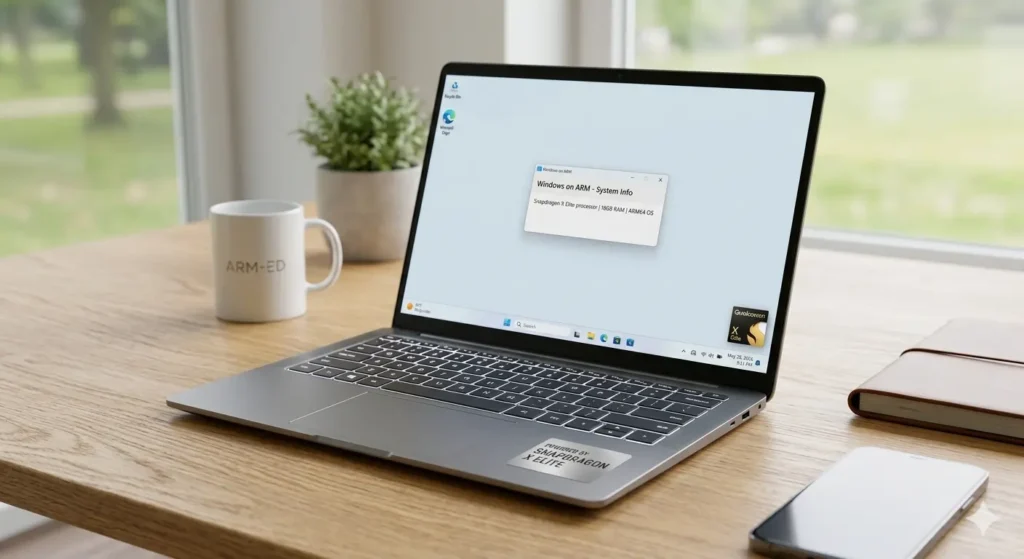
The Windows on ARM budget laptop market may finally have the processor it has been waiting for.
Meanwhile, Qualcomm has spent years proving that ARM technology can power premium laptops with:
- impressive battery life
- strong efficiency
- instant responsiveness
- modern AI capabilities
However, those devices often remained too expensive for many consumers.
Consequently, Qualcomm’s newest processor launch feels different.
Instead of targeting flagship laptops, the company is focusing on affordable Windows devices that could reach the $300 price range.
Additionally, this strategy could bring Windows on ARM to millions of users who previously viewed the platform as too expensive.
Because of that, this announcement may become one of the most important moments in the history of ARM-powered Windows laptops.
This article also connects directly to:
- Snapdragon C: The $300 ARM Laptop Revolution
- Qualcomm Announces Snapdragon C for $300 Windows Laptops
- Snapdragon C Takes Aim at MacBook Neo With Budget ARM Chips
Why a Windows on ARM Budget Laptop Matters
For years, Windows on ARM struggled to attract mainstream buyers.
Meanwhile, many consumers continued choosing:
- Intel laptops
- AMD systems
- Chromebooks
- traditional Windows devices
because affordable ARM alternatives were rare.
Consequently, adoption remained relatively slow.
Additionally, many Windows-on-ARM devices targeted premium users rather than budget-conscious buyers.
Because of that, Qualcomm’s latest strategy represents a major shift.
Instead of chasing high-end sales, the company wants to expand the entire ecosystem.
Furthermore, affordable products often drive adoption much faster than premium devices.
ARM Technology Is No Longer Experimental
A few years ago, ARM laptops felt like an experiment.
Meanwhile, software compatibility remained one of the biggest concerns.
Consequently, many users hesitated before trying ARM-powered Windows devices.
However, the situation has improved dramatically.
Additionally, Microsoft continues investing heavily in:
- ARM optimization
- software compatibility
- application support
- developer tools
Because of that, modern ARM laptops feel much more practical.
Furthermore, developers increasingly optimize applications for ARM hardware.
As a result, the platform now feels mature enough to target mainstream consumers.
Qualcomm Wants to Challenge Chromebooks
One of the biggest opportunities involves Chromebook competition.
Meanwhile, Chromebooks remain popular because they offer:
- low prices
- long battery life
- simple management
- cloud-focused workflows
However, Windows still provides broader software compatibility.
Consequently, Qualcomm hopes ARM-powered Windows laptops can combine:
- Chromebook affordability
- Windows flexibility
- modern efficiency
- improved battery life
Additionally, educational institutions may find this combination particularly attractive.
Because of that, schools could become a major growth market.
Why Qualcomm Is Focusing on Affordability
The company clearly understands how consumers shop for laptops.
Meanwhile, most buyers prioritize:
- value
- battery life
- portability
- reliability
over premium performance.
Consequently, Qualcomm sees an opportunity to compete where the largest number of laptops are sold.
Additionally, ARM processors naturally provide:
- lower power consumption
- cooler operation
- quieter systems
- better efficiency
Because of that, they fit perfectly into affordable laptop designs.
Furthermore, everyday users rarely need workstation-level performance.
Battery Life Could Be the Biggest Advantage
Battery life remains one of ARM’s strongest selling points.
Meanwhile, many budget Windows laptops struggle to last through a full day.
Consequently, ARM efficiency becomes especially valuable.
Additionally, longer battery life benefits:
- students
- commuters
- travelers
- remote workers
Because of that, endurance may become a deciding factor for many buyers.
Furthermore, users increasingly value convenience over small performance differences.
The MacBook Effect Is Real
Apple’s success has helped validate ARM technology.
Meanwhile, consumers increasingly associate ARM processors with:
- excellent battery life
- efficient performance
- thin designs
- premium experiences
Consequently, Qualcomm benefits from growing awareness of ARM computing.
Additionally, the company now has an opportunity to bring similar efficiency advantages to lower-priced Windows devices.
Because of that, ARM laptops no longer need to convince consumers that the technology works.
Instead, they only need to prove they offer good value.
For the Apple comparison, read:
Snapdragon C Takes Aim at MacBook Neo With Budget ARM Chips
Hardware Partners Will Determine Success
Processors alone do not create successful products.
Meanwhile, laptop manufacturers must build compelling devices around the platform.
Consequently, companies like Acer play a critical role.
Additionally, hardware makers must balance:
- pricing
- battery life
- build quality
- performance
while maintaining affordability.
Because of that, the success of Windows on ARM depends heavily on real-world devices.
For the first launch device, read:
Acer Aspire Go 15 Debuts as First Snapdragon C Laptop
There Are Still Questions to Answer
Despite the excitement, several uncertainties remain.
Meanwhile, consumers still want information about:
- multitasking performance
- memory options
- storage configurations
- long-term value
Consequently, some buyers may wait for reviews before making decisions.
Additionally, real-world testing often reveals strengths and weaknesses that specifications cannot.
Because of that, the first generation of devices will receive significant scrutiny.
Why This Launch Could Change Windows Computing
Importantly, Qualcomm’s strategy goes beyond a single processor.
Meanwhile, broader ARM adoption could encourage:
- software optimization
- developer investment
- hardware innovation
- increased competition
Consequently, the entire Windows ecosystem could benefit.
Additionally, affordable products typically drive ecosystem growth faster than premium devices.
Because of that, this launch may have long-term consequences far beyond immediate sales.
For a complete platform overview, read:
Snapdragon C: The $300 ARM Laptop Revolution
Windows on ARM Is Finally Becoming Accessible
For many years, ARM laptops felt interesting but expensive.
Meanwhile, budget buyers had limited options.
Consequently, mainstream adoption remained difficult.
However, Qualcomm’s new strategy changes that conversation.
Additionally, affordable pricing could introduce ARM computing to entirely new audiences.
Because of that, the platform may finally achieve broader acceptance.
Furthermore, increased accessibility often leads to faster innovation and ecosystem growth.
Final Thoughts
The Windows on ARM budget laptop market finally appears ready for expansion.
Meanwhile, Qualcomm is targeting the largest segment of the laptop industry rather than the most expensive one.
Consequently, affordable ARM-powered Windows devices may become significantly more common over the next few years.
Additionally, consumers could benefit from:
- lower prices
- stronger battery life
- improved efficiency
- greater competition
For the complete guide covering Qualcomm’s strategy, ecosystem goals, and future plans, read:
Snapdragon C: The $300 ARM Laptop Revolution
And surprisingly, the future growth of Windows on ARM may not come from premium laptops at all.
It may come from affordable devices that finally bring ARM computing to everyday users.