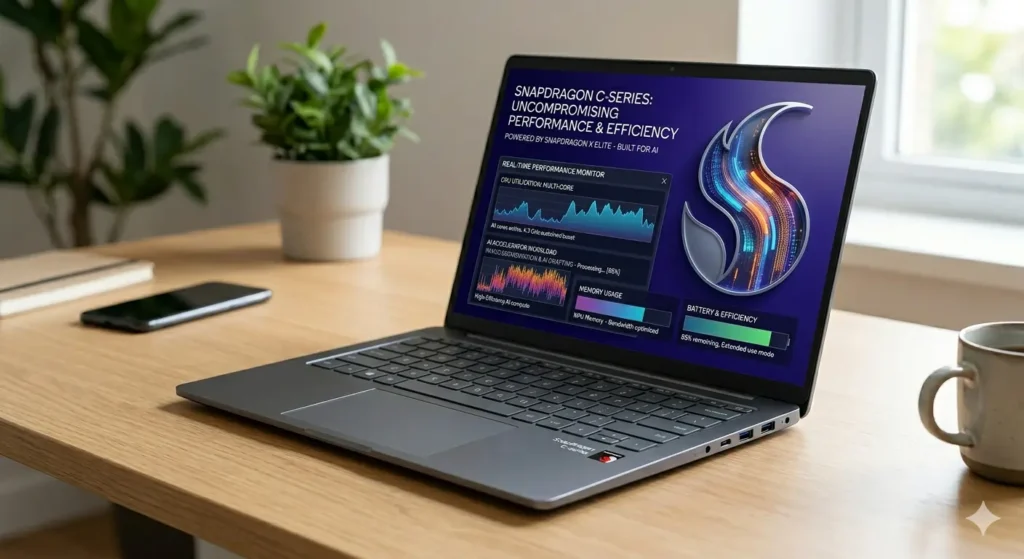
The Snapdragon C performance debate started almost immediately after Qualcomm announced its newest budget laptop platform.
Meanwhile, affordable laptops have a reputation problem.
Many consumers hear the phrase “budget laptop” and immediately think of:
- slow performance
- poor battery life
- cheap construction
- frustrating user experiences
Consequently, Qualcomm faces a difficult challenge.
The company must convince buyers that a low-cost ARM processor can deliver a surprisingly good experience without premium pricing.
Additionally, the success of the platform may depend less on benchmarks and more on how laptops feel during everyday use.
Because of that, Snapdragon C performance could become one of the most important stories in the Windows laptop market this year.
This discussion also connects directly to:
- Snapdragon C: The $300 ARM Laptop Revolution
- Qualcomm Picks a Bad Time to Pitch a $300 Laptop Platform
- Acer Aspire Go 15 Debuts as First Snapdragon C Laptop
Why Snapdragon C Performance Matters
Most consumers do not buy processors.
Instead, they buy experiences.
Meanwhile, users simply want laptops that:
- open applications quickly
- browse smoothly
- handle video calls
- last throughout the day
Consequently, Qualcomm does not necessarily need to beat premium processors.
Additionally, it only needs to deliver a better experience than many traditional budget laptops.
Because of that, real-world responsiveness may matter more than benchmark scores.
Furthermore, everyday users often judge laptops by:
- speed
- reliability
- battery life
- convenience
rather than synthetic tests.
Budget Laptops Have a Bad Reputation
For years, affordable laptops often forced buyers to accept compromises.
Meanwhile, many low-cost systems suffered from:
- weak processors
- slow storage
- limited memory
- poor battery endurance
Consequently, consumers learned to lower their expectations.
Additionally, budget devices frequently became frustrating after only a short period of use.
Because of that, Qualcomm has an opportunity to change perceptions.
If Snapdragon-powered laptops feel smoother than expected, they could redefine what buyers expect from entry-level computers.
ARM Performance Is Different From Traditional PC Performance
One important point often gets overlooked.
Meanwhile, ARM processors prioritize efficiency rather than brute force.
Consequently, they focus on:
- responsiveness
- battery life
- power efficiency
- thermal management
instead of maximizing performance at all costs.
Additionally, many everyday tasks do not require enormous processing power.
For example:
- web browsing
- streaming
- office work
- online learning
- video conferencing
can perform extremely well on efficient hardware.
Because of that, ARM systems often feel faster than their specifications suggest.
Snapdragon C Is Not Trying to Beat Flagship Chips
Some critics immediately compare affordable processors to premium hardware.
However, that comparison misses the point.
Meanwhile, Qualcomm designed this platform for:
- students
- families
- casual users
- office workers
rather than enthusiasts.
Consequently, comparing it to high-end processors creates unrealistic expectations.
Additionally, the goal is affordability without sacrificing usability.
Because of that, the platform should be judged against other budget laptops rather than flagship systems.
For the complete platform overview, read:
Snapdragon C: The $300 ARM Laptop Revolution
Battery Life Could Hide Performance Weaknesses
Interestingly, battery life often influences user satisfaction more than raw speed.
Meanwhile, many consumers are tired of:
- carrying chargers
- searching for outlets
- charging constantly
- worrying about battery levels
Consequently, excellent endurance can significantly improve the overall experience.
Additionally, ARM processors generally excel in this area.
Because of that, some users may gladly trade a little performance for dramatically better battery life.
Furthermore, all-day endurance often feels more valuable than slightly faster benchmarks.
The Acer Aspire Go 15 Will Be the First Real Test
Processor announcements generate excitement.
However, actual products reveal the truth.
Meanwhile, the Acer Aspire Go 15 becomes one of the first opportunities to evaluate Snapdragon C performance in a real laptop.
Consequently, reviewers will closely examine:
- multitasking
- responsiveness
- battery life
- application compatibility
Additionally, real-world testing often uncovers strengths and weaknesses hidden by marketing presentations.
Because of that, the Aspire Go 15 may shape public perception of the platform.
For more about the launch device, read:
Acer Aspire Go 15 Debuts as First Snapdragon C Laptop
Software Compatibility Still Matters
Performance is only useful if applications work properly.
Meanwhile, Windows on ARM continues improving rapidly.
Consequently, more applications now support ARM processors directly.
Additionally, Microsoft continues investing in:
- compatibility tools
- ARM optimization
- developer support
- software improvements
Because of that, the user experience is significantly better than earlier Windows-on-ARM generations.
However, compatibility remains an important factor for some buyers.
Why Some People Are Skeptical
Not everyone is convinced.
Meanwhile, critics point to:
- limited specifications
- uncertain performance
- unanswered questions
- aggressive pricing targets
Consequently, skepticism remains understandable.
Additionally, affordable devices often struggle to exceed expectations.
Because of that, Qualcomm still has plenty to prove.
Furthermore, consumers have seen ambitious budget laptop promises before.
Why Some People Are Optimistic
At the same time, supporters see genuine potential.
Meanwhile, ARM technology continues improving across:
- smartphones
- tablets
- laptops
- enterprise systems
Consequently, many believe affordable ARM laptops could finally reach mainstream acceptance.
Additionally, Qualcomm’s strengths align with modern priorities such as:
- battery life
- efficiency
- portability
- affordability
Because of that, the platform enters the market with several meaningful advantages.
The Real Question Isn’t Performance
Surprisingly, the biggest question may not be performance at all.
Meanwhile, most consumers simply want a laptop that:
- feels responsive
- lasts all day
- stays affordable
- works reliably
Consequently, user experience may matter far more than benchmark numbers.
Additionally, efficient hardware often creates smoother day-to-day experiences than raw specifications suggest.
Because of that, Qualcomm’s strategy may be smarter than it initially appears.
The Future Depends on Execution
Ultimately, success depends on execution.
Meanwhile, Qualcomm has presented an attractive vision for affordable ARM computing.
Consequently, manufacturers must now deliver products that fulfill those promises.
Additionally, consumers will judge:
- pricing
- battery life
- performance
- reliability
rather than marketing claims.
Because of that, the first generation of devices becomes critically important.
For a broader look at Qualcomm’s long-term plans, read:
Snapdragon C: The $300 ARM Laptop Revolution
Final Thoughts
The Snapdragon C performance debate misses one important point.
Meanwhile, this platform was never designed to compete with flagship processors.
Instead, Qualcomm wants to improve what consumers expect from affordable laptops.
Consequently, success should be measured through:
- usability
- battery life
- efficiency
- value
rather than benchmark records.
Additionally, ARM technology continues becoming more capable every year.
And surprisingly, Snapdragon C may not power awful laptops at all.
It may power some of the most practical budget Windows devices we’ve seen in years.