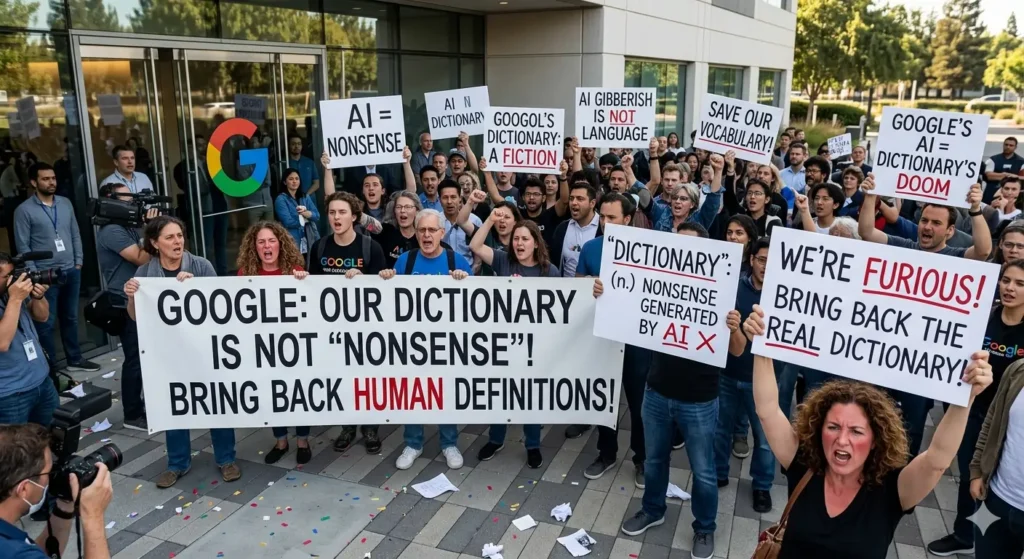
Google AI search problems are becoming harder for users to ignore.
Meanwhile, many people recently noticed bizarre AI-generated responses replacing simple dictionary-style answers inside Google Search.
Instead of showing:
- direct definitions
- clean explanations
- reliable meanings
- standard dictionary results
Google increasingly displays:
- AI summaries
- generated explanations
- awkward wording
- strange interpretations
instead.
Consequently, users across social media are growing increasingly frustrated.
And honestly, many people just want normal search results back.
Additionally, Google AI search problems increasingly affect:
- dictionary lookups
- simple definitions
- quick searches
- direct answers
Consequently, many users now feel AI-generated search often makes basic searches harder instead of easier.
That backlash also connects directly to:
- Disable Google AI Overview With These 4 Tricks
- Searching “Disregard” Completely Breaks Google’s AI Overview
- Google’s AI Can’t Spell Google (or Anything Else)
- Google’s AI Search Is Driving Users Straight to Privacy-First Engines
Why Google AI Search Problems Feel So Frustrating
Initially, users trusted Google because it was:
- fast
- accurate
- simple
- predictable
Meanwhile, dictionary-style searches traditionally returned:
- clean definitions
- pronunciation help
- direct explanations
- trusted reference sources
within seconds.
However, AI-generated summaries increasingly replace those simple answers.
Consequently, users sometimes receive:
- overly long responses
- awkward wording
- incorrect meanings
- confusing explanations
instead of straightforward definitions.
Additionally, many users feel AI search often complicates things unnecessarily.
Because of that, frustration surrounding Google AI search problems keeps growing.
Why Google AI Search Problems Hurt Simple Searches
Importantly, dictionary searches are one of the simplest things search engines should handle.
Meanwhile, users searching word meanings usually want:
- quick answers
- reliable definitions
- concise explanations
- direct information
instead of conversational AI summaries.
However, AI-generated responses often try to sound:
- natural
- conversational
- human-like
- explanatory
even when simplicity would work better.
Consequently, some AI Overviews feel:
- bloated
- repetitive
- strangely worded
- less useful than traditional search results
overall.
And honestly, many people now miss the old Google experience.
How Google AI Search Problems Are Damaging Trust
Meanwhile, criticism increased after multiple viral examples involving:
- hallucinated facts
- weird spelling errors
- incorrect summaries
- broken AI responses
inside Google Search.
Consequently, users increasingly question whether AI-generated answers belong at the top of search pages at all.
Additionally, some AI-generated definitions reportedly included:
- awkward phrasing
- misleading wording
- confusing explanations
- unnecessary complexity
for extremely basic terms.
Because of that, dictionary-style searches became another example of growing distrust toward AI-generated search.
Google Keeps Expanding AI Anyway
Despite criticism, Google continues aggressively integrating AI into:
- Search
- Chrome
- Android
- Gemini
- Workspace
Meanwhile, Google I/O 2026 heavily emphasized:
- AI-generated summaries
- conversational search
- Gemini integrations
- AI-powered workflows
across nearly every product.
Consequently, users increasingly encounter AI-generated answers constantly throughout daily internet use.
Additionally, many users feel Google now prioritizes:
- AI visibility
- generated content
- automated responses
over clean traditional search.
Because of that, backlash surrounding AI search continues growing online.
Dictionary Results Used to Be Simple
Interestingly, old Google dictionary results were extremely effective precisely because they were:
- short
- clear
- predictable
- reliable
Meanwhile, AI-generated explanations often try to:
- elaborate
- summarize context
- sound conversational
- explain too much
instead of simply defining words.
Consequently, users increasingly feel AI search creates unnecessary clutter for basic searches.
Additionally, many people say dictionary lookups should never require:
- generated summaries
- conversational responses
- AI interpretation
- complicated explanations
Because of that, users increasingly search for ways to reduce AI-generated content inside Google.
Why Google AI Search Problems Push Users Away
Meanwhile, many users now describe Google’s AI rollout as:
- unavoidable
- intrusive
- unfinished
- overcomplicated
Consequently, alternative search engines increasingly attract users wanting:
- traditional search results
- direct links
- fewer summaries
- cleaner interfaces
instead of AI-heavy pages.
Additionally, every viral AI mistake increases criticism surrounding:
- AI Overviews
- Gemini integration
- generated summaries
- automated search answers
overall.
Because of that, Google’s AI strategy increasingly divides users online.
AI Still Does Not Truly Understand Language
Importantly, AI systems predict text statistically rather than truly understanding language.
Meanwhile, large language models generate answers using:
- token prediction
- probability patterns
- language relationships
- statistical structures
Consequently, AI-generated definitions can sometimes:
- sound confident
- feel polished
- appear intelligent
while still being:
- awkward
- misleading
- unnecessarily complex
- partially incorrect
Additionally, users often mistake conversational tone for actual understanding.
Because of that, simple dictionary searches sometimes expose AI weaknesses surprisingly clearly.
Traditional Search Engines Suddenly Feel Valuable Again
Interestingly, frustration surrounding AI-generated search may benefit:
- DuckDuckGo
- Brave Search
- Kagi
- traditional web search
overall.
Meanwhile, many users increasingly prefer:
- direct website links
- forum discussions
- human-written explanations
- classic search layouts
instead of AI-generated summaries.
Consequently, “classic search” is quietly becoming a selling point again.
Additionally, some privacy-focused search engines now market themselves specifically as:
- cleaner alternatives
- AI-light experiences
- traditional search engines
Because of that, Google’s AI rollout may accidentally strengthen competitors long term.
Google Probably Won’t Slow Down
Realistically, Google appears fully committed to AI-powered search.
Meanwhile, competitors including:
- Microsoft
- OpenAI
- Meta
- Apple
continue aggressively expanding AI integration too.
Consequently, AI-generated search experiences will probably become even more common over time.
Additionally, companies increasingly view:
- AI assistants
- generated summaries
- conversational interfaces
- automated search
as the future of the internet.
Because of that, users wanting simpler search may increasingly rely on:
- filters
- browser extensions
- alternative search engines
- AI workarounds
instead.
Final Thoughts
Google AI search problems now extend far beyond occasional hallucinations.
Meanwhile, users increasingly complain that AI-generated summaries replace:
- simple answers
- direct definitions
- clean search results
- reliable information
with confusing automated responses instead.
Consequently, frustration surrounding AI-powered search keeps spreading rapidly online.
Additionally, many users now feel Google Search became:
- more cluttered
- less predictable
- harder to trust
- unnecessarily complicated
because of aggressive AI integration.
Furthermore, Google AI search problems now extend beyond hallucinations alone.
Meanwhile, users increasingly complain that AI-generated responses feel:
- cluttered
- overcomplicated
- unreliable
- unnecessarily conversational
even during extremely simple searches.
And surprisingly, one of the biggest complaints about modern AI search may simply be this:
people still miss getting straightforward answers to simple questions.