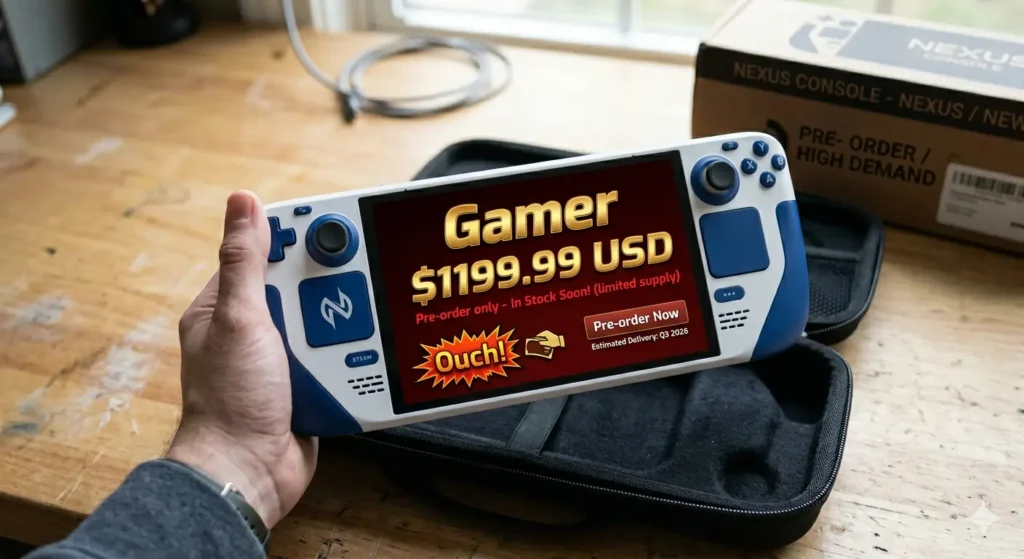
The Steam Deck back in stock announcement should have been great news for gamers.
Meanwhile, months of shortages left many buyers waiting for:
- OLED restocks
- refurbished models
- LCD availability
- normal pricing
across multiple regions.
However, Valve’s restock came with one massive problem:
the prices exploded.
Consequently, some Steam Deck OLED models now reportedly cost up to $300 more than before. (TheSixthAxis)
And honestly, many gamers are reacting with more frustration than excitement.
That growing situation also connects directly to:
- Steam Deck Price Hike Makes Old Hardware Cost More
- Steam Deck RAM Shortage Sends Prices Soaring
- Refurbished LCD Steam Decks Are Still Cheap — Buy One Before They’re Gone
Why the Steam Deck Back in Stock News Feels Bittersweet
Initially, gamers simply wanted Steam Deck OLED models available again.
Meanwhile, shortages caused:
- constant sellouts
- reseller markups
- regional shortages
- refurbished scarcity
for months. (Reddit)
Consequently, many players hoped a proper restock would finally stabilize pricing.
However, Valve instead announced dramatically higher prices tied to:
- memory shortages
- SSD costs
- rising component prices
- global supply chain pressure. (Steam Community)
Because of that, the Steam Deck back in stock situation immediately became controversial.
Steam Deck OLED Prices Changed Dramatically
Importantly, the Steam Deck OLED 512GB reportedly jumped from $549 to $789.
Meanwhile, the 1TB OLED version reportedly increased from $649 to $949. (Kotaku)
Consequently, the Steam Deck now competes much more directly against:
- gaming laptops
- desktop PCs
- ASUS ROG Ally systems
- Lenovo Legion Go devices
instead of affordable handheld consoles.
Additionally, many gamers now question whether nearly three-year-old hardware should cost this much at all.
And honestly, seeing a Steam Deck OLED cost more than some consoles feels bizarre.
Memory Shortages Are Driving the Entire Problem
Meanwhile, Valve blamed:
- rising memory costs
- storage pricing
- NAND shortages
- logistics pressure
for the increases. (Steam Community)
Interestingly, AI infrastructure growth continues consuming huge amounts of:
- DRAM
- SSD storage
- flash memory
- server hardware
across the tech industry.
Consequently, gaming companies now compete against:
- AI hyperscalers
- cloud providers
- enterprise hardware firms
- data centers
for the same components.
Because of that, gaming hardware prices continue increasing across:
- laptops
- handhelds
- SSDs
- consumer electronics
overall.
The Steam Deck No Longer Feels “Budget”
Initially, the Steam Deck became famous because it offered:
- affordable PC gaming
- portable flexibility
- massive Steam compatibility
- strong value
without requiring gaming laptop money.
However, the Steam Deck back in stock pricing completely changes that perception.
Consequently, premium OLED models now feel much closer to:
- ultrabooks
- gaming notebooks
- premium handheld PCs
- creator-focused devices
than budget gaming systems.
Additionally, many gamers may now consider:
- desktops
- gaming laptops
- competing handhelds
instead of automatically choosing the Steam Deck.
Because of that, Valve risks losing one of the device’s biggest strengths:
its affordability.
Refurbished LCD Models Suddenly Look Smarter
Interestingly, refurbished LCD Steam Deck units now appear much more attractive.
Meanwhile, OLED prices continue climbing aggressively.
Consequently, older LCD models suddenly offer:
- cheaper portable gaming
- SteamOS flexibility
- strong game compatibility
- better overall value
for budget-focused buyers.
Additionally, Valve’s refurbished systems still include:
- warranty support
- tested hardware
- quality checks
- official certification
instead of random secondhand uncertainty.
Because of that, many gamers may now prefer refurbished LCD models over premium OLED pricing.
Gamers Are Reacting Very Negatively
Meanwhile, online reactions have been extremely frustrated.
Many players argue the Steam Deck succeeded because it balanced:
- affordability
- flexibility
- portability
- PC gaming freedom
better than competing devices.
Consequently, the massive price hikes feel completely against the original appeal.
Additionally, many users now compare the Steam Deck against:
- gaming laptops
- PS5 systems
- Xbox consoles
- competing handheld PCs
instead of budget gaming devices.
And honestly, the handheld suddenly feels far less approachable for casual gamers.
The Entire Handheld Market Is Becoming Premium
Importantly, the Steam Deck is not alone.
Meanwhile, handheld gaming PCs increasingly include:
- OLED displays
- premium cooling
- advanced APUs
- workstation-level memory
- creator-focused multitasking
Consequently, portable gaming systems now resemble:
- compact gaming laptops
- creator devices
- portable workstations
more than simple handheld consoles.
Additionally, manufacturers increasingly focus on:
- enthusiasts
- creators
- premium buyers
instead of mainstream gamers.
Because of that, affordable handheld PC gaming feels increasingly rare overall.
Could Prices Drop Again?
Possibly, but not soon.
Meanwhile, experts continue warning about:
- DRAM shortages
- NAND pricing pressure
- AI infrastructure expansion
- unstable memory supply
throughout 2026. (The Verge)
Consequently, gaming hardware prices may remain unstable for quite a while.
Additionally, Valve already warned earlier this year that Steam Deck OLED stock problems were tied to memory shortages. (Reddit)
Because of that, the current pricing may not be temporary at all.
Final Thoughts
The Steam Deck back in stock announcement should have been exciting news.
However, the massive price increases completely changed the conversation.
Meanwhile, rising costs involving:
- DRAM
- SSD storage
- NAND memory
- AI infrastructure demand
continue reshaping the entire gaming hardware market. (The Verge)
Consequently, affordable portable PC gaming is becoming increasingly difficult to maintain.
Additionally, Valve now faces the difficult challenge of balancing:
- premium hardware
- rising component costs
- gamer expectations
- handheld accessibility
at the same time.
And surprisingly, the biggest problem with the Steam Deck’s return may not be stock shortages anymore.
It may simply be the new price tag attached to it.